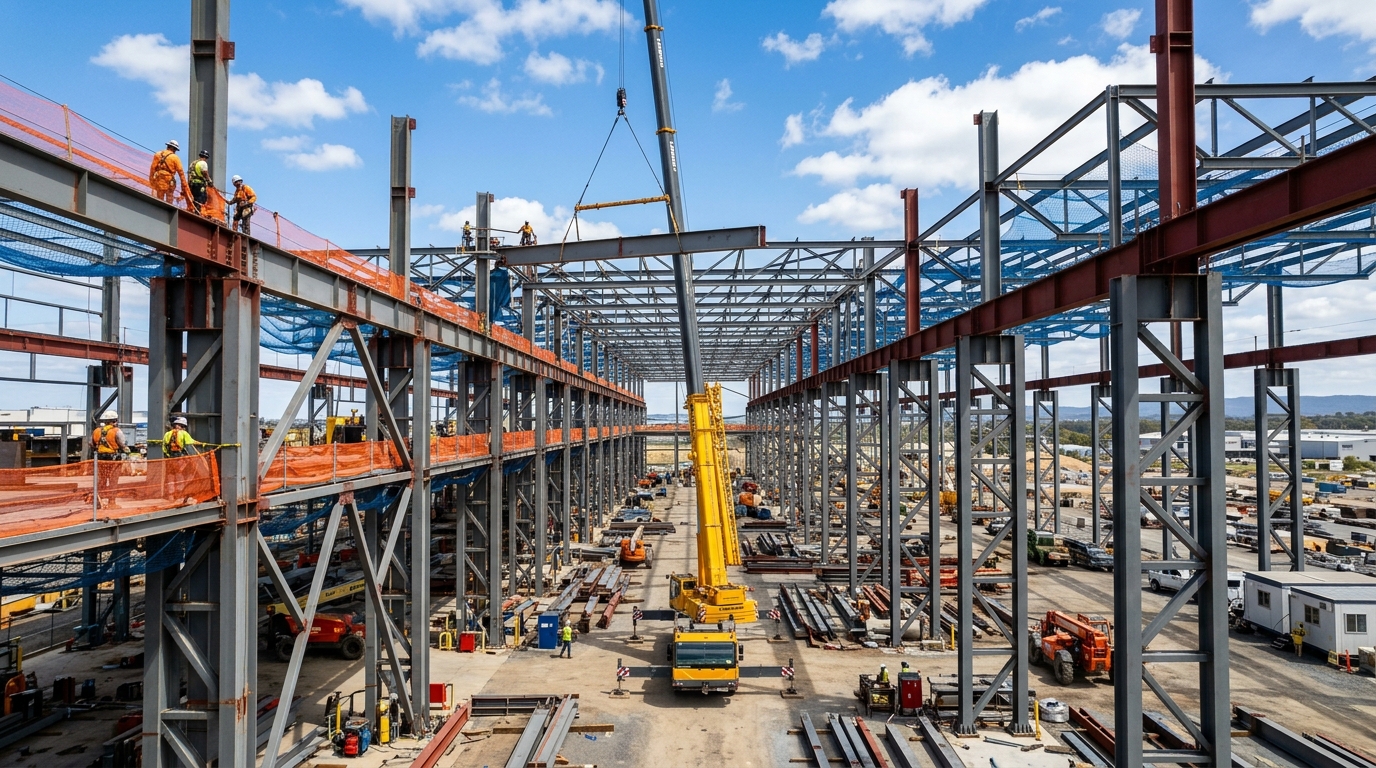
In contemporary industrial facility construction and modern logistics hub development, Pre-Engineered Steel Buildings (PEB) have emerged as the industry benchmark due to superior clear-span capabilities, optimized interior cubic volumes, and rapid construction timelines. However, structural durability and life-cycle safety are fundamentally determined by factory fabrication precision, rigorous torque verification of high-strength bolted connections, and high-performance protective coating systems formulated for tropical climates. Drawing on comprehensive mechanical and structural engineering experience, Tin Long details vital technical standards governing heavy industrial steelwork.

Figure 1: Heavy industrial structural steel portal frame assembled and erected on-site with calibrated precision.
1. Engineering Design Principles & Structural Analysis for PEB Facilities
Industrial steel building design must fulfill ultimate limit states for strength and serviceability limit states for structural deflection under AISC 360-16 and TCVN 5575:2012 codes. Tin Long structural engineers perform multi-variable load combination analyses across all primary structural frames:
1.1. Dead Load, Live Load & Severe Wind Engineering
Wind loading represents the governing design criterion for industrial steel structures in Southeast Asia. Calculation parameters account for regional terrain roughness and severe storm wind velocities. Portal roof and wall cable bracing systems utilizing high-tensile galvanized wire ropes or structural steel angles are engineered to swiftly transfer lateral wind forces directly into the reinforced concrete foundations.
1.2. Overhead Traveling Crane Deflection & Dynamic Surge Loads
For industrial facilities operating overhead traveling cranes ranging from 5 to 20 metric tons, runway girder vertical deflection is strictly restricted to L/600 under maximum wheel loading. Furthermore, transverse lateral thrust generated by crane trolley braking is stabilized by horizontal surge girders rigidly connected to the primary building columns.
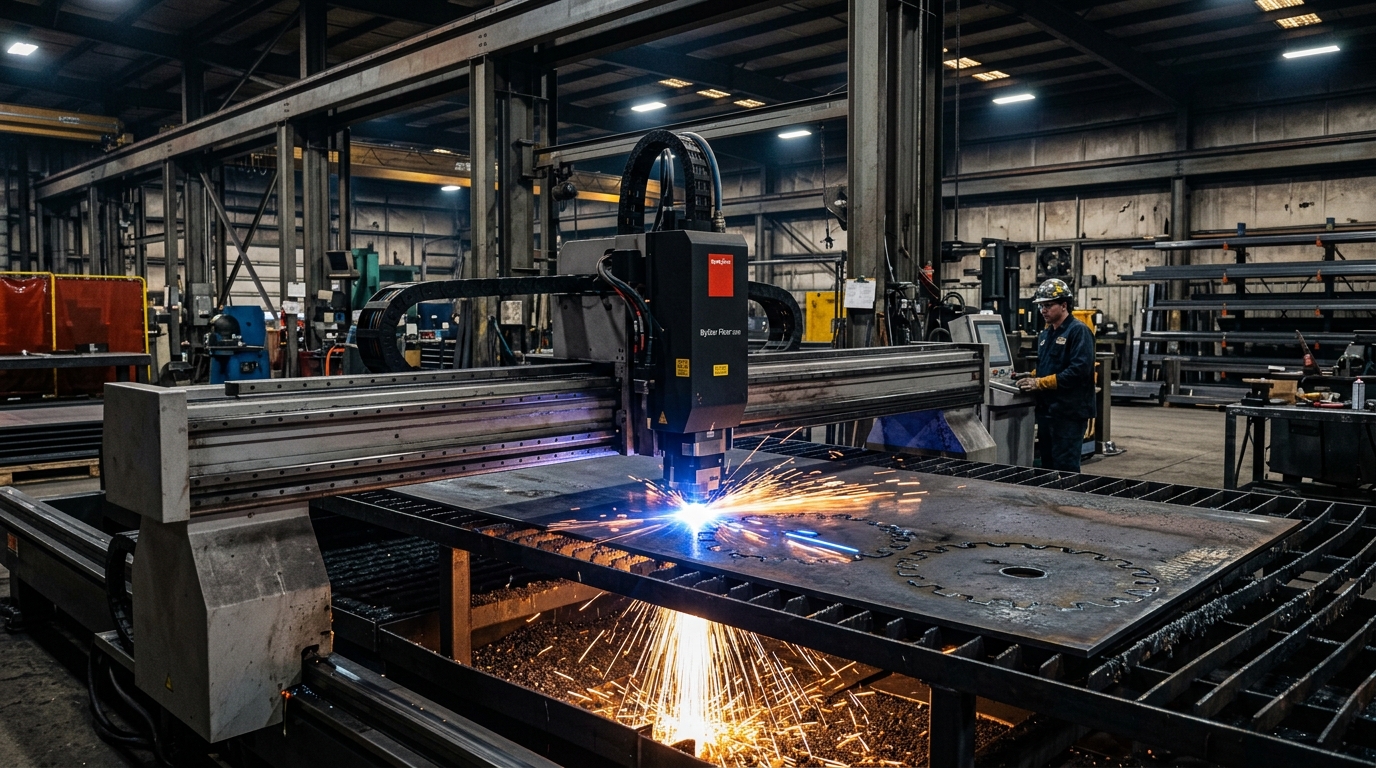
Figure 2: Precision CNC fiber laser cutting of heavy structural connection plates inside the Tin Long facility.
2. Standard Technical Specifications for Industrial Steel Members & Fasteners
The following material grades, fabrication tolerances, and non-destructive examination (NDE) methods are enforced across all Tin Long structural projects:
| Structural Component | Steel Grade & Material Specification | Applicable Engineering Code | Joining Methodology & QA Verification |
|---|---|---|---|
| Built-Up Columns & Rafters | Q345B / SS490 / ASTM A572 Grade 50 plate, thickness 8mm - 25mm | AWS D1.1 structural welding code / TCVN 5575:2012 | Submerged Arc Welding (SAW), 100% Ultrasonic Testing (UT) of full-penetration butt welds |
| Haunch & Splice Connection Plates | Q345B / ASTM A36 plate, CNC fiber-laser profile cut | Hole center tolerance ≤ ±0.5mm, zero edge taper | Multi-spindle CNC drilling, automated weld bevel preparation |
| Column Base Anchor Bolts | Hot-dip galvanized heavy round bar, Grade 5.6 to 8.8 | ASTM F1554 / TCVN 1916:1995 | Secured within rigid steel templates prior to foundation concrete pouring |
| High-Strength Structural Bolts | Grade 8.8 / Grade 10.9 heavy hex bolts (ASTM A325M / A490M) | ISO 898-1 / TCVN 8853:2011 structural bolting | Calibrated torque wrench verification, turn-of-nut tensioning protocol |
| Roof & Wall Purlin System | Cold-formed C/Z purlins, high-tensile galvanized coil Z275 (G450) | AS 1397 / ASTM A653 atmospheric corrosion resistance | Continuous roll-forming with automated slotted punch pattern, M12 Grade 4.8 zinc-plated hardware |
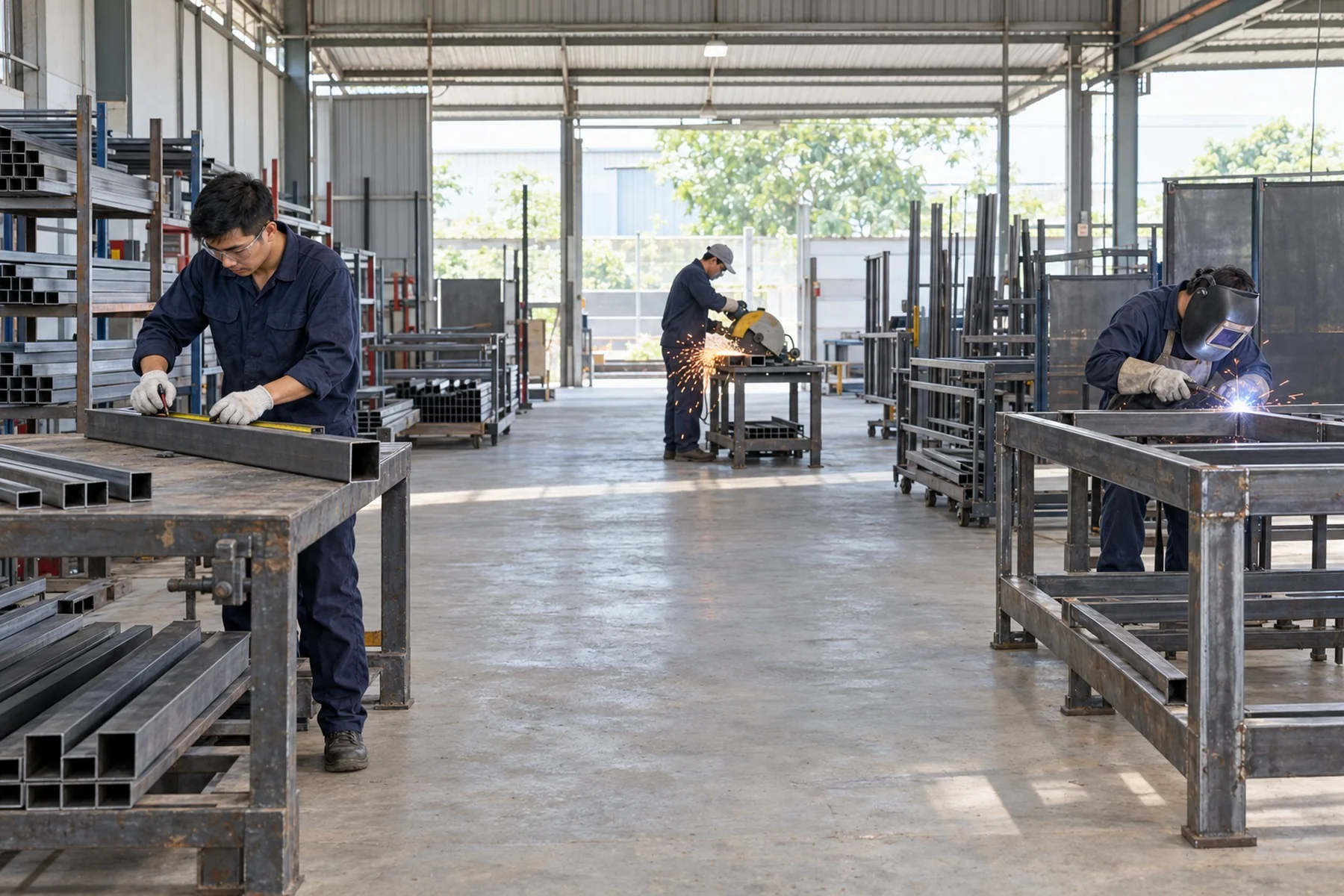
Figure 3: Certified structural welders fitting and welding heavy built-up I-beam components in the workshop.
3. Torque Verification Protocol for High-Strength Bolted Haunch Connections
Field-bolted haunch moment splices and apex ridge joints represent the critical structural links of PEB frames. Tin Long enforces a strict two-stage tightening procedure under AISC specifications:
3.1. Snug-Tight Initial Stage
Erection crews utilize electric impact wrenches to bring steel faying surfaces into firm, unyielding full metal-to-metal contact. Initial clamping force reaches approximately 40% to 50% of nominal design bolt tension.
3.2. Final Calibrated Torque & Witness Mark Verification
Trained QA/QC inspectors utilize calibrated digital torque wrenches verified by third-party metrology centers. Every single bolt in moment-resisting connections is torque-audited, with indelible torque witness marks painted across nut and protruding thread for visual compliance verification by project consultants.
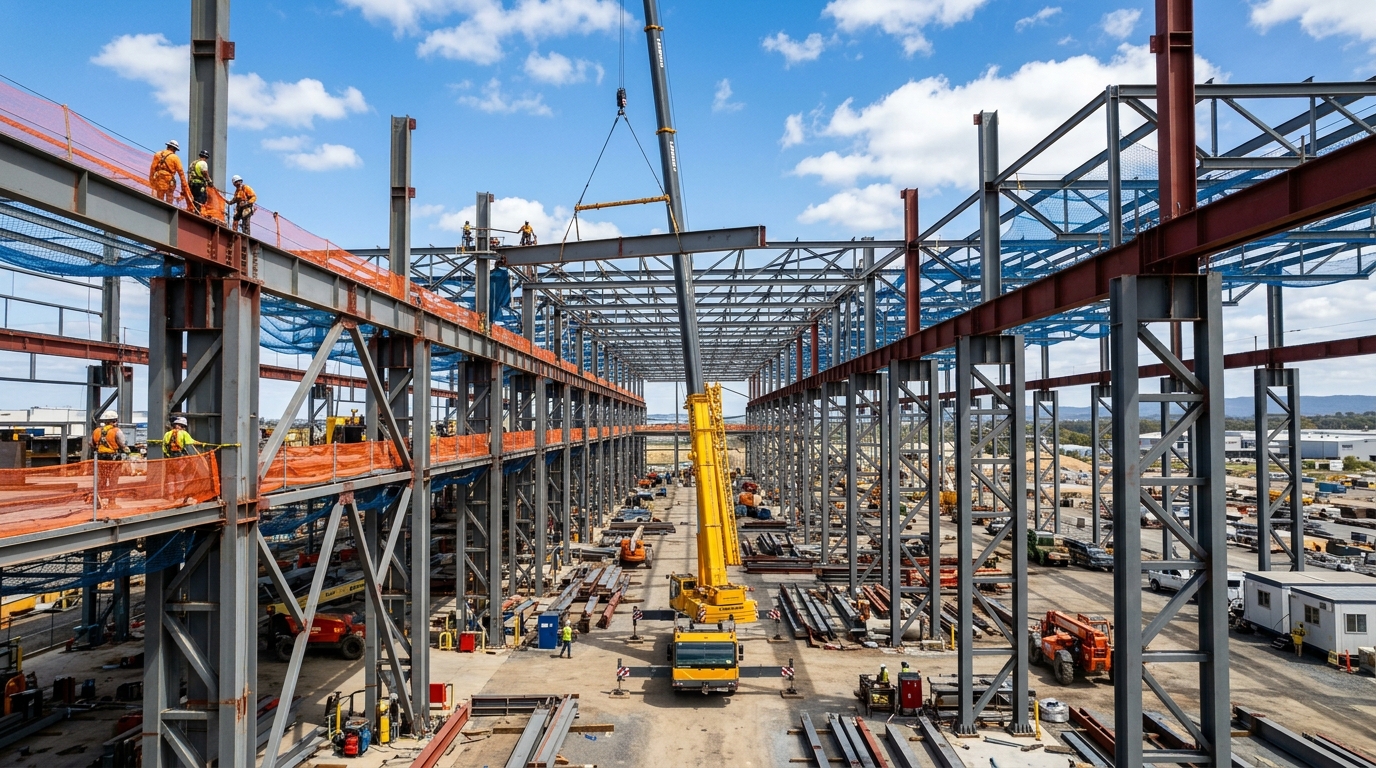
Figure 4: Fully erected industrial steel building with maximized unobstructed floor space for heavy manufacturing.
4. Surface Preparation to ISO Sa 2.5 & Three-Coat Protective Paint System
To resist harsh tropical humidity, marine airborne chlorides, and industrial atmospheric corrosion over a 25-year design life, steel members undergo multi-stage protective coating:
- Automated Steel Shot Blasting (Sa 2.5): Structural members are processed through automated centrifugal shot-blast cabinets to remove 100% of mill scale, rust, and contaminants, achieving an angular surface profile of 40 to 70 µm for superior coating adhesion.
- Zinc-Rich Epoxy Primer: Application of high-solid zinc-rich epoxy (> 65% metallic zinc by weight) at minimum 60 µm Dry Film Thickness (DFT), providing sacrificial cathodic corrosion protection.
- Epoxy Micaceous Iron Oxide (MIO) Intermediate Coat: 75 µm high-build barrier coat forming an impermeable overlapping barrier against moisture and chloride ion ingress.
- Polyurethane (PU) Topcoat: 50 µm aliphatic polyurethane finish providing UV degradation resistance, color gloss retention, and industrial chemical resistance.
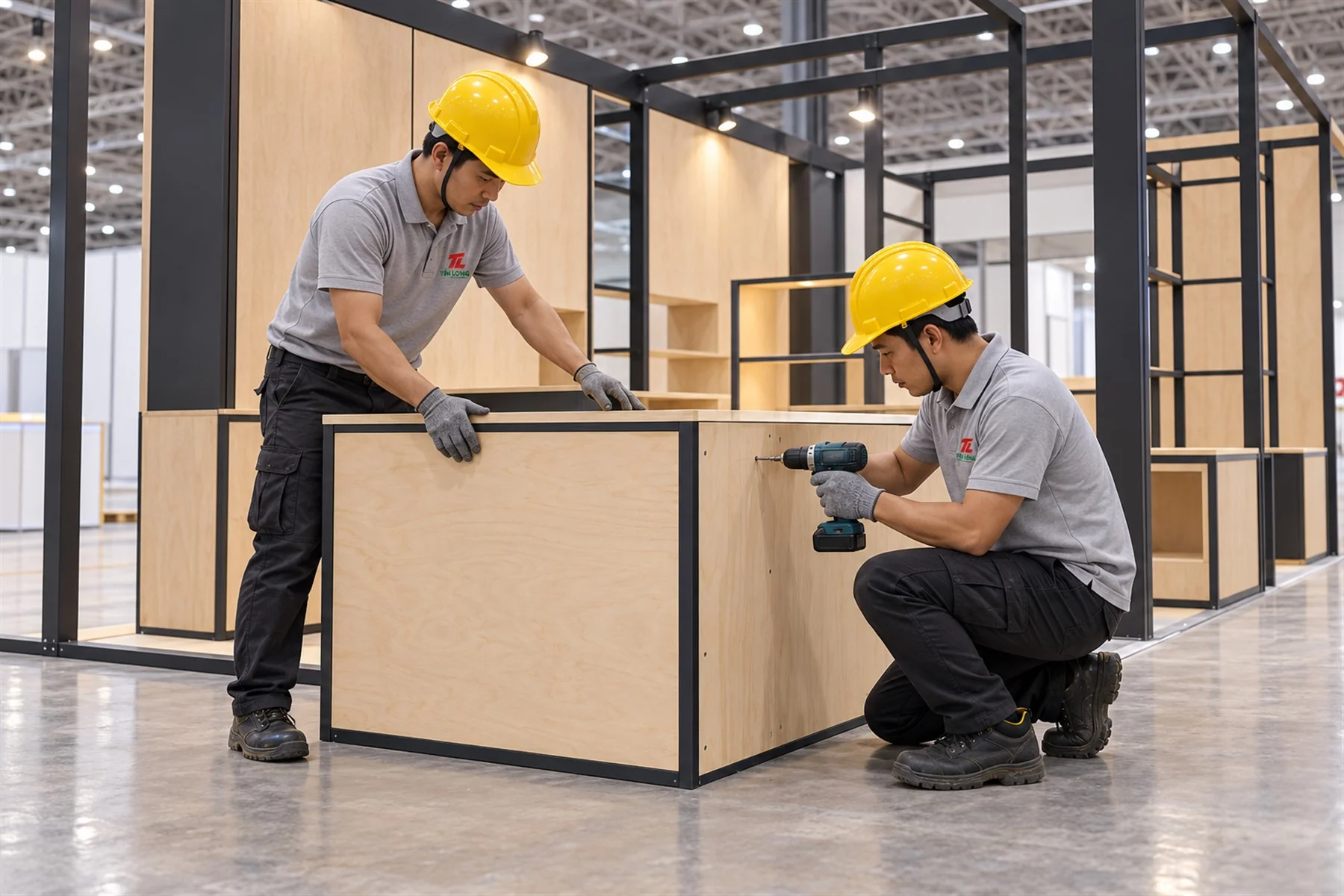
Figure 5: Coordinated tandem crane hoisting of heavy rafter assemblies adhering to strict site safety standards.
5. Integrated Fabrication & Turnkey Erection Capabilities
Featuring a modern manufacturing facility equipped with high-precision fiber laser cutting, automated submerged arc welding, shot blasting facilities, and an experienced engineering team, Tin Long maintains direct control over structural modeling, factory prefabrication, and safe field erection—delivering robust, cost-effective, and fully certified industrial facilities.